I always make this Century Egg Sausage for our New Year’s Eve feast because it’s refreshing, savory, and incredibly satisfying. The bouncy egg texture combined with the unique flavor of century eggs and smoky ham makes it perfect as a cold appetizer or drinking snack. Once you learn it, your family will definitely think you’re a pro.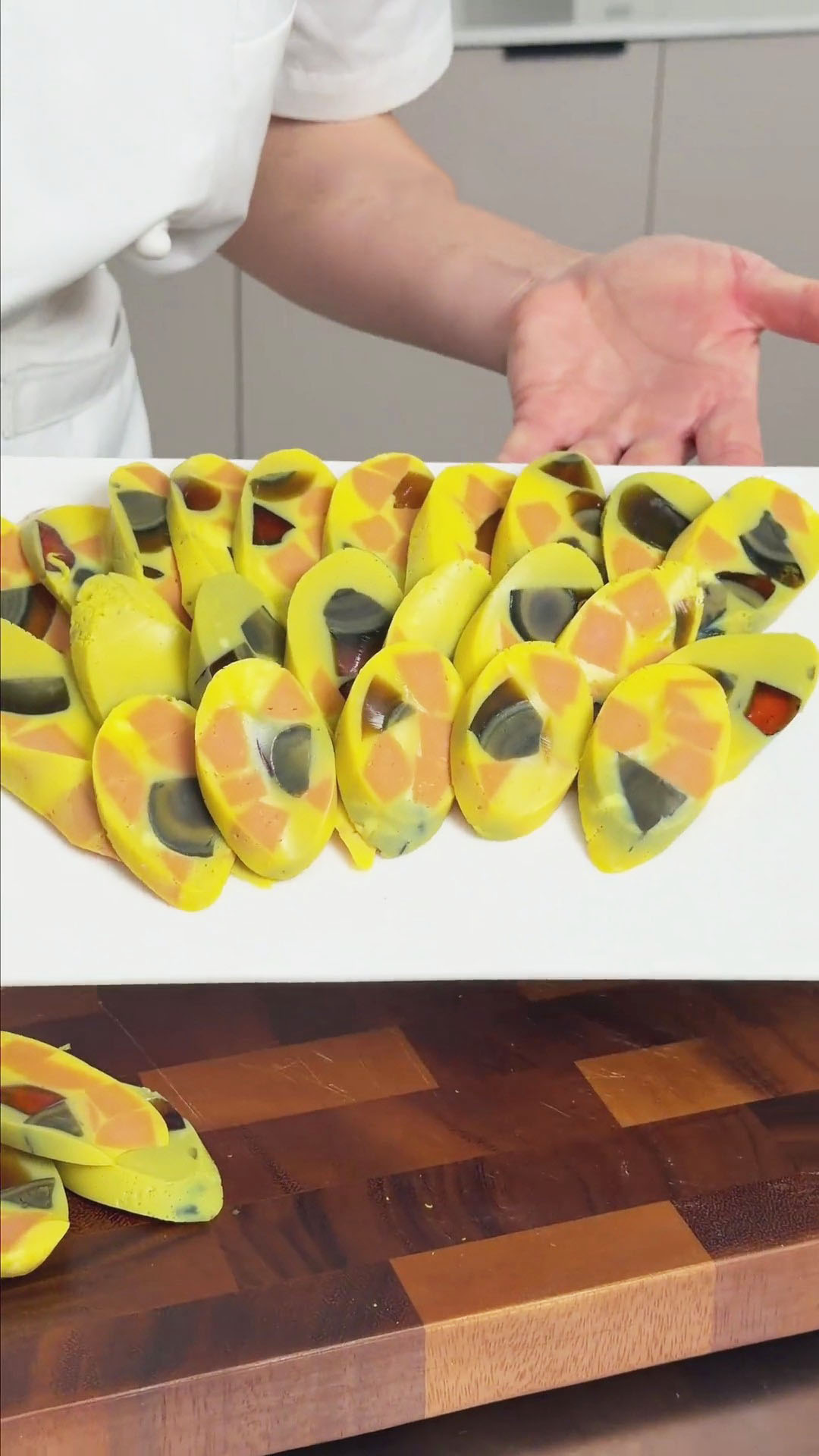
Contents
Why You’ll Love This Recipe
-
Simple ingredients, no additives
-
Bouncy, tender, and packed with flavor
-
Beautiful sliced presentation for festive tables
-
Make-ahead friendly (perfect for holiday prep)
-
Light yet satisfying—great with dipping sauce
Ingredients
Main Ingredients
16 eggs
4 century eggs (1 century egg pairs with 4 eggs – golden ratio)
2 ham sausages
Seasoning
2g salt
1g white pepper
Tools & Extras
1 piece size-50 food-grade sausage casing (about 210cm long)
1 plastic water bottle (to make a funnel)
Cotton string (optional)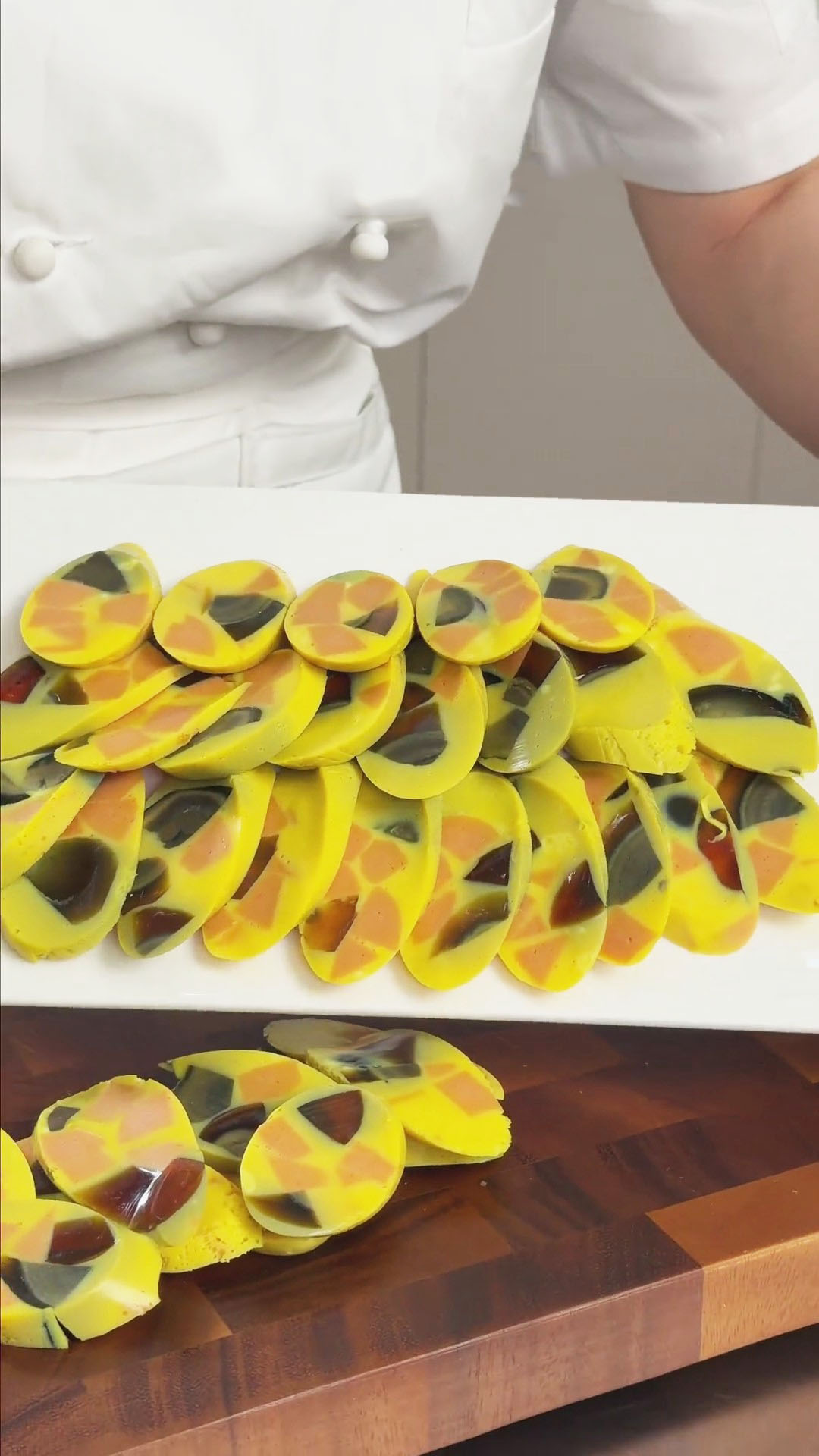
Instructions
Step 1: Prepare the Egg Mixture
Crack the eggs one at a time into a bowl to avoid shells or spoiled eggs. Whisk thoroughly until the mixture is smooth and fully combined.
Place the century eggs in cold water and bring to a boil. Cook for a few minutes, then transfer to cool water. This makes them easier to peel and helps firm up the soft centers for better slicing. Peel and dice into evenly sized cubes.
Dice the ham sausages into pieces similar in size to the century eggs. Add both to the beaten eggs.
Season with salt and white pepper. Keep the seasoning light so the natural flavors shine. Stir well and let sit briefly, skimming off any foam on the surface.
Step 2: Prepare the Casing & Fill
Cut the sausage casing into about 70cm lengths. Twist one end tightly and tie a firm knot, leaving a small tail to prevent bursting.
Cut the top off a plastic bottle to create a funnel. Fit the open end of the casing tightly over the funnel opening.
Slowly pour the egg mixture into the funnel, allowing it to flow into the casing. Do not overfill—leave about 1/5 empty space to allow for expansion during cooking. Gently squeeze to release trapped air bubbles.
Tie the other end securely once filled. Locate the center of the filled sausage, twist firmly to divide it into two shorter sections, and secure if needed. Repeat with remaining mixture. This recipe makes about 6 sausages.
If you don’t have sausage casings, you can steam the egg mixture in a heatproof container instead. You can refer to my Home-Style Steamed Egg with Carrot for the steaming method and texture control—it uses a similar gentle cooking principle and works beautifully as an alternative.
Also, don’t let leftover casings go to waste. They can be used to make my Foolproof Casings Pork Skin Jelly, another festive cold dish that’s perfect for holiday gatherings.
Step 3: Cook Gently
Place the sausages into a pot of cold water. Starting with cold water prevents the casing from bursting due to sudden temperature change.
Bring to a boil over high heat, then immediately reduce to medium-low heat. Keep the water at a gentle simmer (small bubbles only) and cook for 10 minutes. Do not let the water boil vigorously.
Turn off the heat and transfer the sausages to cold water for 2 minutes to cool and set. Let them cool completely before peeling. This step ensures a firmer, bouncier texture and easier removal of the casing.
Step 4: Slice & Serve
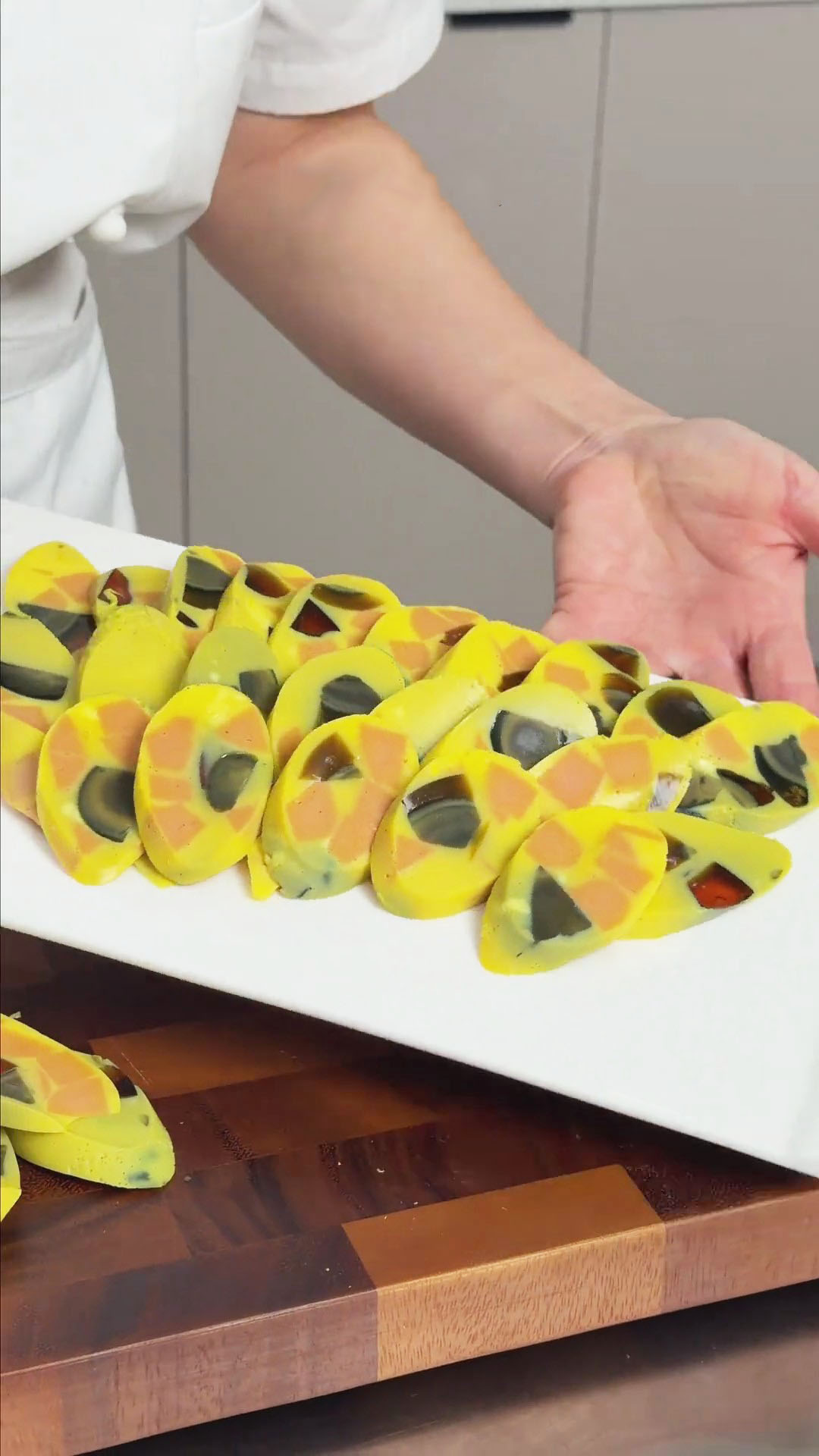
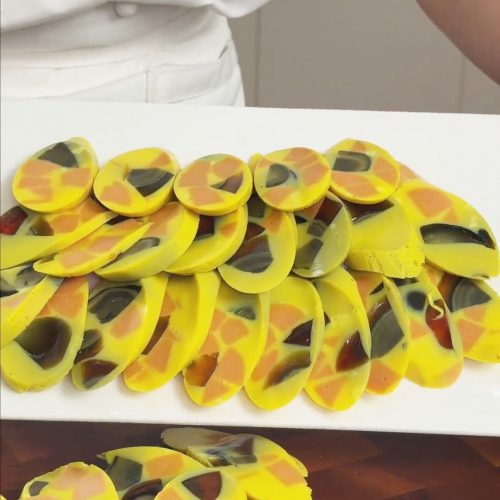
Once fully cooled, peel off the casing from the knotted end. Slice into even rounds and arrange on a plate.
Serve as is, or dip in a simple sauce made with light soy sauce, black vinegar, and minced garlic. Chili oil, sesame oil, or cilantro can be added for extra flavor.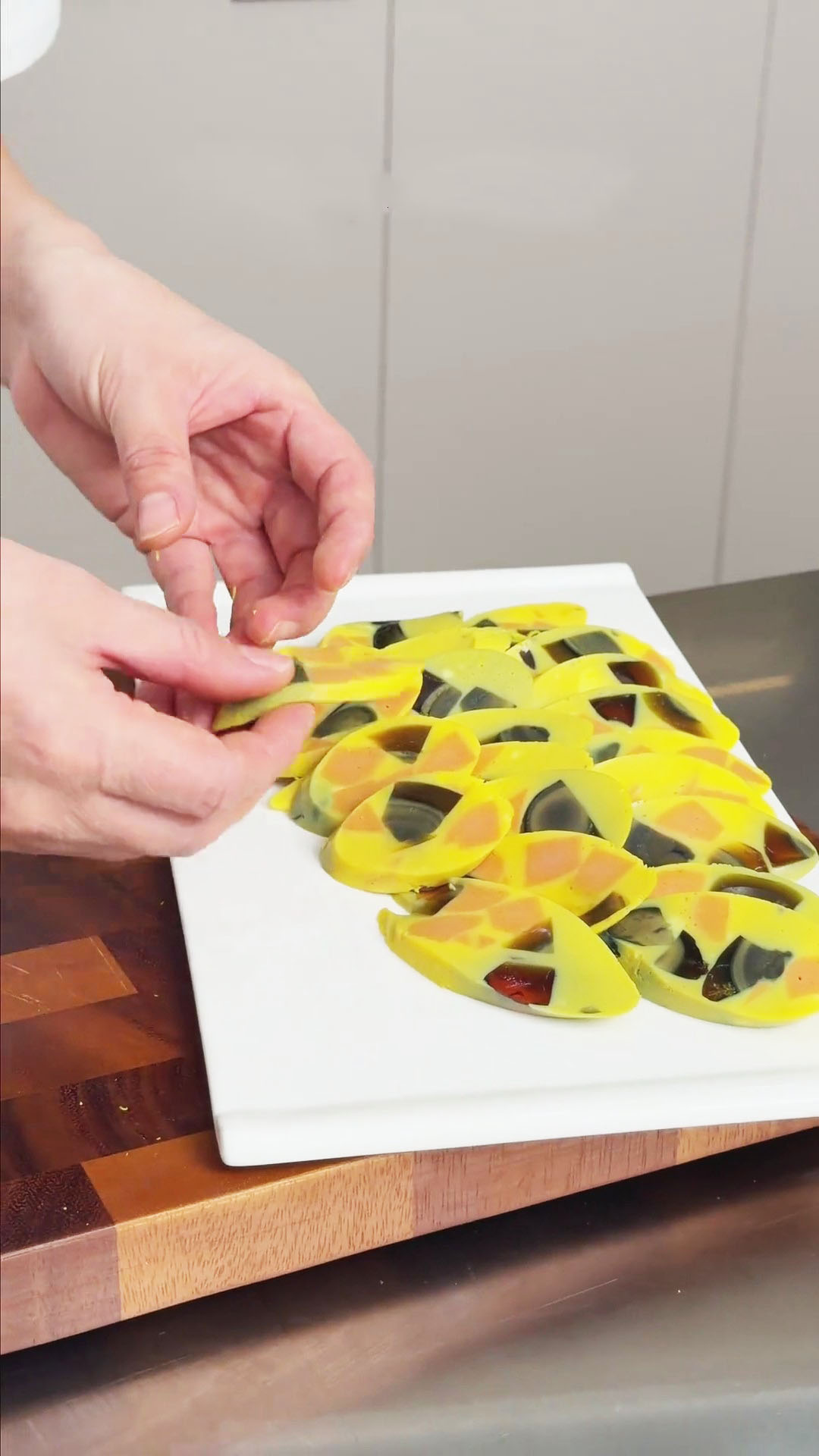
Cooking Tips
-
Briefly boiling the century eggs makes peeling easier and helps them hold their shape.
-
Never overfill the casing—leaving space is key to preventing bursting.
-
Keep the water at a gentle simmer, not a rolling boil.
-
Always cool completely before peeling to avoid sticking or tearing.
-
Store in an airtight container in the refrigerator for 3–5 days. Perfect for prepping ahead of holiday dinners.
Frequently Asked Questions
Can I steam instead of boil the sausages?
Boiling at a gentle simmer gives more even cooking. Steaming works well too—just follow the gentle steaming method in Home-Style Steamed Egg with Carrot.
What if I don’t have sausage casings?
Use a heatproof dish or bowl and steam the mixture instead. The texture will be slightly softer but still delicious.
Why did my casing burst?
It was likely overfilled or boiled at too high a temperature. Always leave space and maintain a gentle simmer.
Can I make it ahead for New Year’s Eve?
Yes! It keeps well in the refrigerator for up to 5 days. Just slice and plate when ready to serve.
Can I adjust the seasoning?
Absolutely. Keep the base lightly seasoned and adjust flavors through the dipping sauce to suit your taste.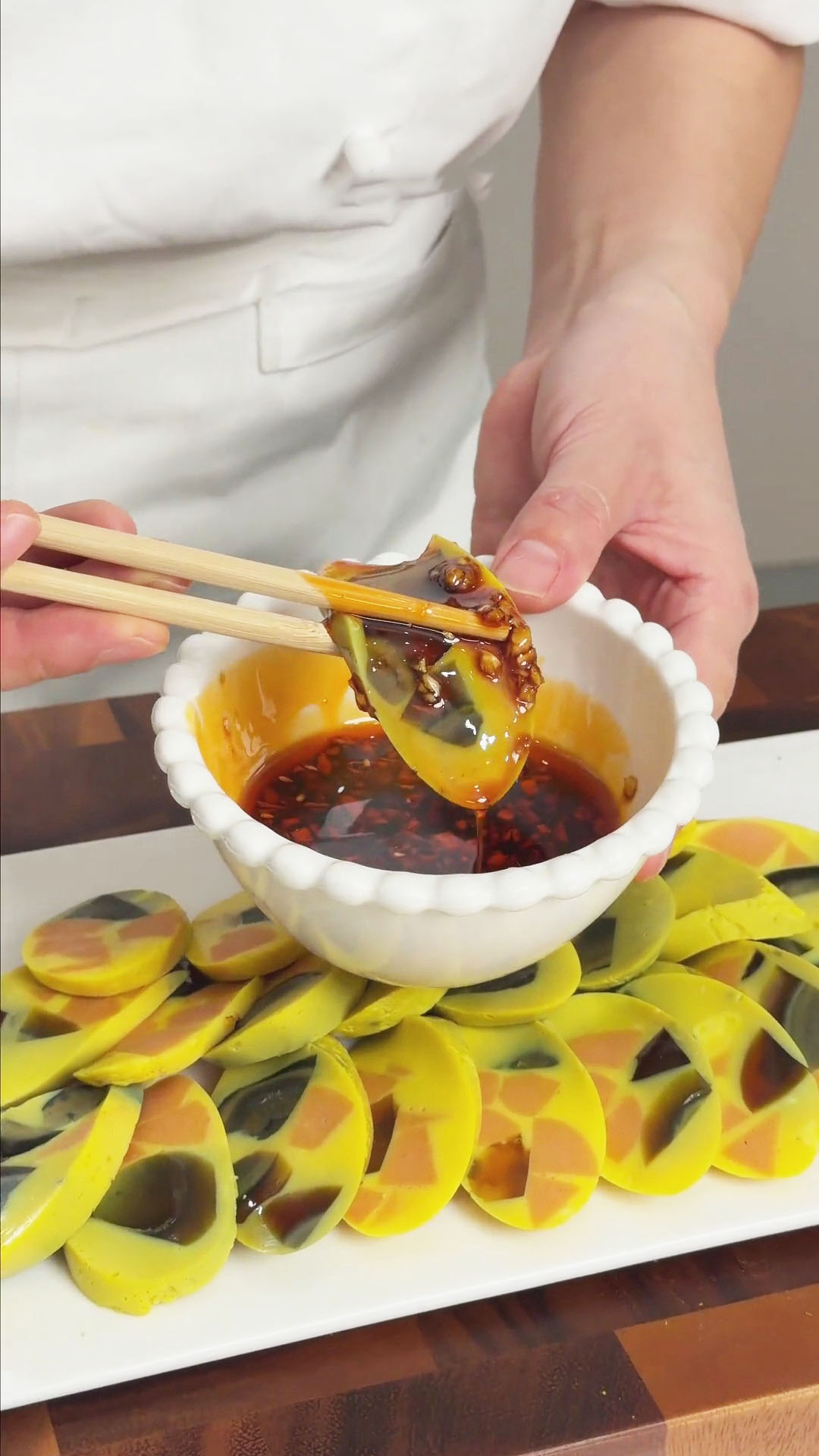
Century Egg Sausage – A Must-Have for Chinese New Year’s Eve Dinner
Instructions
Step 1: Prepare the Egg Mixture
- Crack the eggs one at a time into a bowl to avoid shells or spoiled eggs. Whisk thoroughly until the mixture is smooth and fully combined.
- Place the century eggs in cold water and bring to a boil. Cook for a few minutes, then transfer to cool water. This makes them easier to peel and helps firm up the soft centers for better slicing. Peel and dice into evenly sized cubes.
- Dice the ham sausages into pieces similar in size to the century eggs. Add both to the beaten eggs.
- Season with salt and white pepper. Keep the seasoning light so the natural flavors shine. Stir well and let sit briefly, skimming off any foam on the surface.
Step 2: Prepare the Casing & Fill
- Cut the sausage casing into about 70cm lengths. Twist one end tightly and tie a firm knot, leaving a small tail to prevent bursting.
- Cut the top off a plastic bottle to create a funnel. Fit the open end of the casing tightly over the funnel opening.
- Slowly pour the egg mixture into the funnel, allowing it to flow into the casing. Do not overfill—leave about 1/5 empty space to allow for expansion during cooking. Gently squeeze to release trapped air bubbles.
- Tie the other end securely once filled. Locate the center of the filled sausage, twist firmly to divide it into two shorter sections, and secure if needed. Repeat with remaining mixture. This recipe makes about 6 sausages.
- If you don’t have sausage casings, you can steam the egg mixture in a heatproof container instead. You can refer to my Home-Style Steamed Egg with Carrot for the steaming method and texture control—it uses a similar gentle cooking principle and works beautifully as an alternative.
- Also, don’t let leftover casings go to waste. They can be used to make my Foolproof Casings Pork Skin Jelly, another festive cold dish that’s perfect for holiday gatherings.
Step 3: Cook Gently
- Place the sausages into a pot of cold water. Starting with cold water prevents the casing from bursting due to sudden temperature change.
- Bring to a boil over high heat, then immediately reduce to medium-low heat. Keep the water at a gentle simmer (small bubbles only) and cook for 10 minutes. Do not let the water boil vigorously.
- Turn off the heat and transfer the sausages to cold water for 2 minutes to cool and set. Let them cool completely before peeling. This step ensures a firmer, bouncier texture and easier removal of the casing.
Step 4: Slice & Serve
- Once fully cooled, peel off the casing from the knotted end. Slice into even rounds and arrange on a plate.
- Serve as is, or dip in a simple sauce made with light soy sauce, black vinegar, and minced garlic. Chili oil, sesame oil, or cilantro can be added for extra flavor.
Video


